
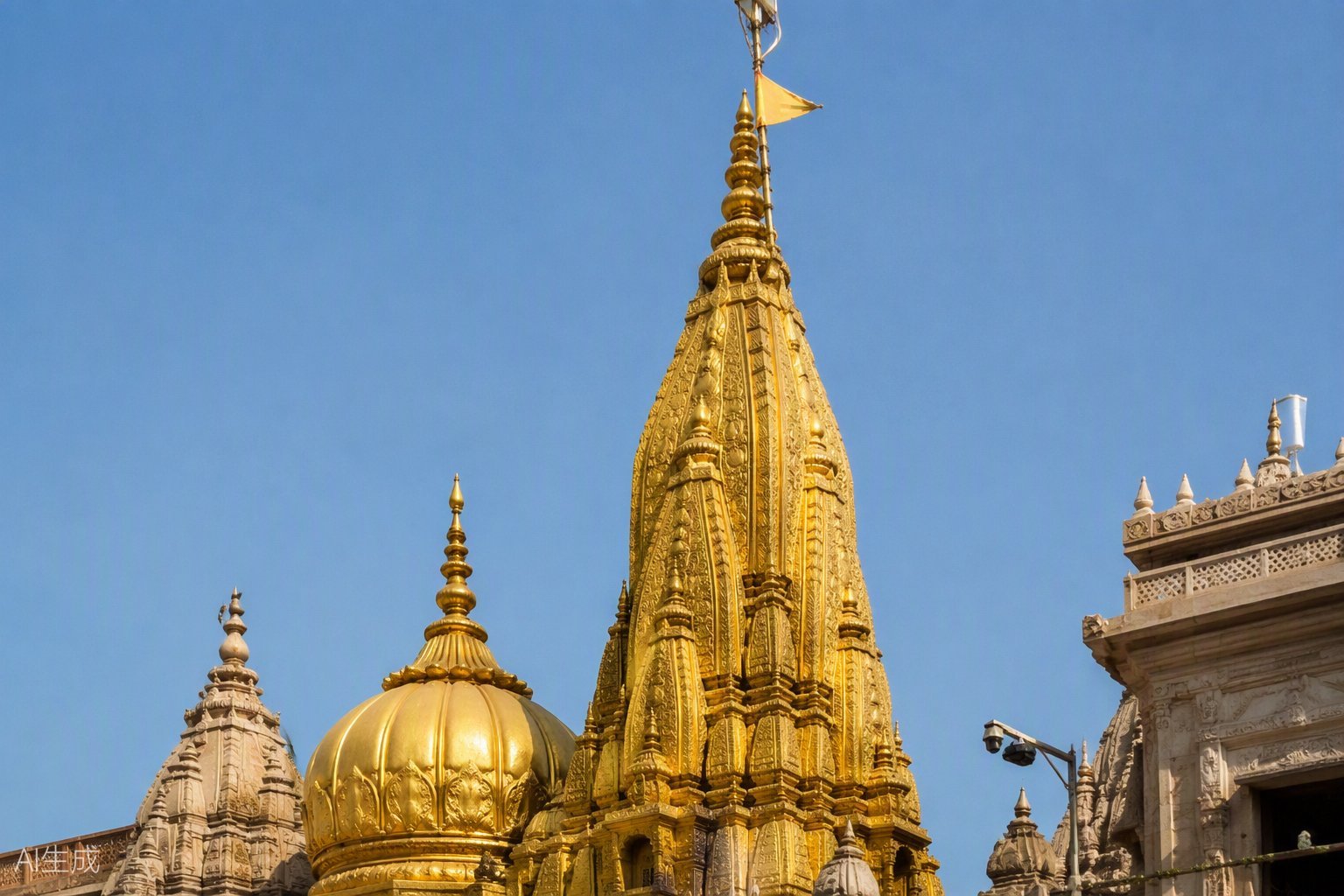
For centuries, reaching Vishwanath meant threading Vishwanath Gali — a lane so narrow that shoulders brush both walls, where the temple revealed itself only at the last turn. The Kashi Vishwanath Dham corridor, inaugurated in December 2021, added a second way: a broad processional court from the Ganga to the temple, with ghats, galleries, museums and facilities.
What Changed
- Access: pilgrims can now walk from the riverfront to darshan in minutes; the elderly and wheelchair users have a step-free route for the first time in the temple's living memory.
- Facilities: cloakrooms, drinking water, seating, medical aid and clean toilets — infrastructure the old lanes could never hold.
- The view: the corridor opens sightlines from the temple to the Ganga that the medieval city had closed — the golden shikhara now rises above a processional axis.
- Rediscovery: construction revealed dozens of older temples within the acquired blocks, many restored and visible along the corridor.
What Didn't Change
Vishwanath Gali still runs; the flower-sellers still call; the old approach survives for those who want it. The darshan itself — the queue, the sanctum, the few seconds before the linga — is exactly what it was. The corridor changed the journey to Baba Vishwanath, not the meeting.
Which Approach Should You Take?
First visit with elders or limited time: the corridor. Feeling strong and curious: enter by the gali, exit by the corridor, and you will have read the city's whole history in a single darshan.