
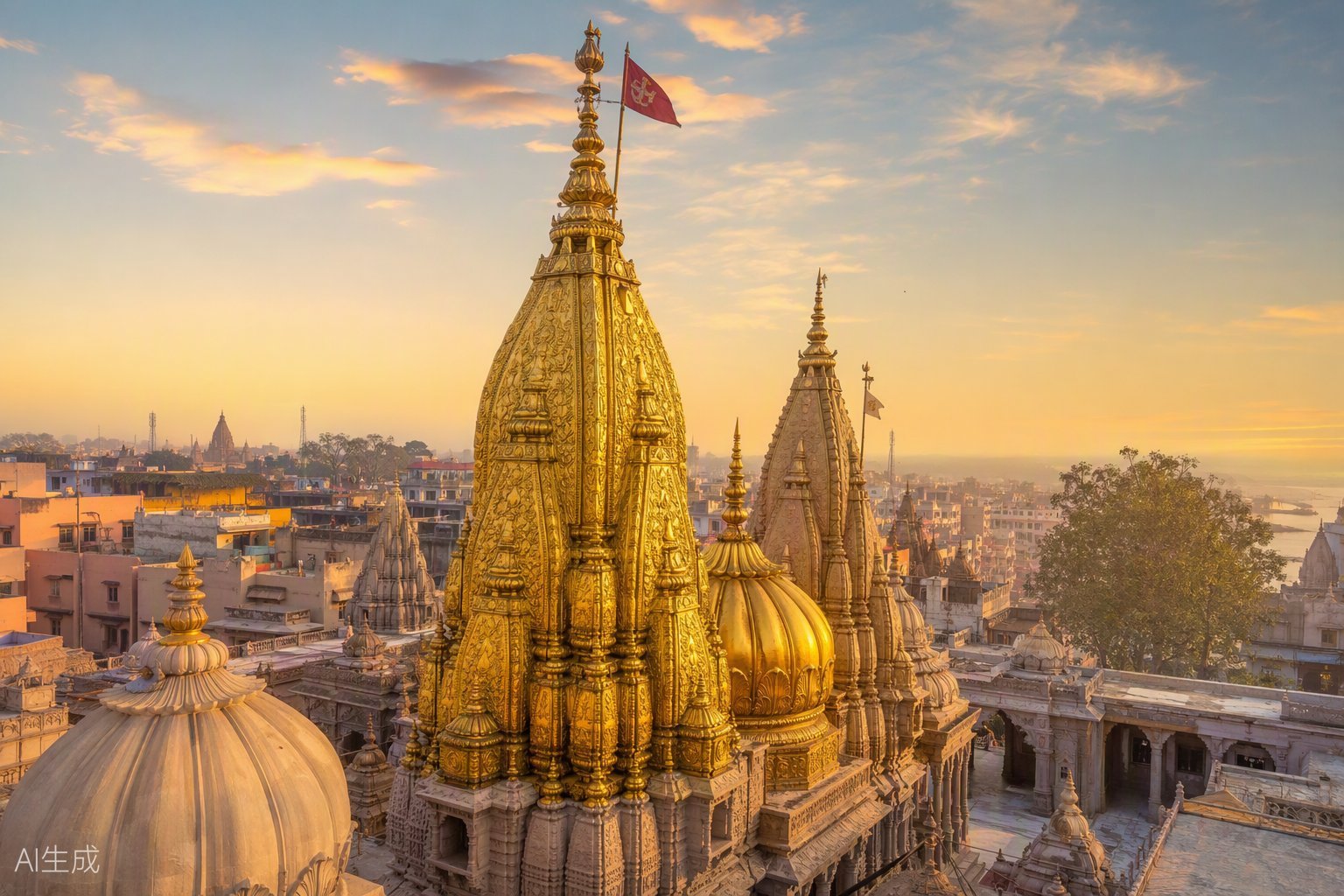
Form of the Formless
The Shivling — the aniconic sign in which Shiva is most widely worshipped — is among the world's most profound religious symbols and, outside the tradition, its most misunderstood. Within Shaivism it is plain: linga means "mark" or "sign" — the sign of the formless absolute, of Shiva as the pillar of light without beginning or end that the Jyotirlinga tradition proclaims. The rounded shaft rises from the yoni-base of Shakti: consciousness grounded in power, the union from which the universe pours.
The Jyotirlinga Story
When Brahma and Vishnu contested supremacy, Shiva appeared between them as an endless column of light. Each god raced to find its limit — upward, downward — and failed. The linga is that column's sign: the infinite that no measuring can master. Worship of the linga is worship of Shiva as the limitless.
How the Linga Is Worshipped
Abhishek — the pouring of water, milk, honey, curd and ghee over the linga — is its classic worship, with bilva leaves, flowers, bael fruit and mantra. The continuous drip-pot (dhara) keeps the lord bathed; the north-facing drain (pranala) carries the offered water, which devotees receive as charanamrit. In Kashi, pilgrims bring Ganga jal for Vishwanath's abhishek — the river returned to the lord who caught her.
Kinds of Lingas
Swayambhu (self-manifest) lingas like the Jyotirlingas; manusha (installed) lingas of every temple; the banalingas of the Narmada's stone; the earth-and-cowdung parthiv lingas made for special worship. Kashi counts lingas beyond number — tradition says a linga for every stone of the city.