Quick Facts
| Deity | Lord Shiva as Vishwanath / Vishweshwara (Jyotirlinga) |
|---|---|
| Location | Vishwanath Gali, Lahori Tola, Varanasi, Uttar Pradesh |
| Present structure | Rebuilt 1780 by Maharani Ahilyabai Holkar |
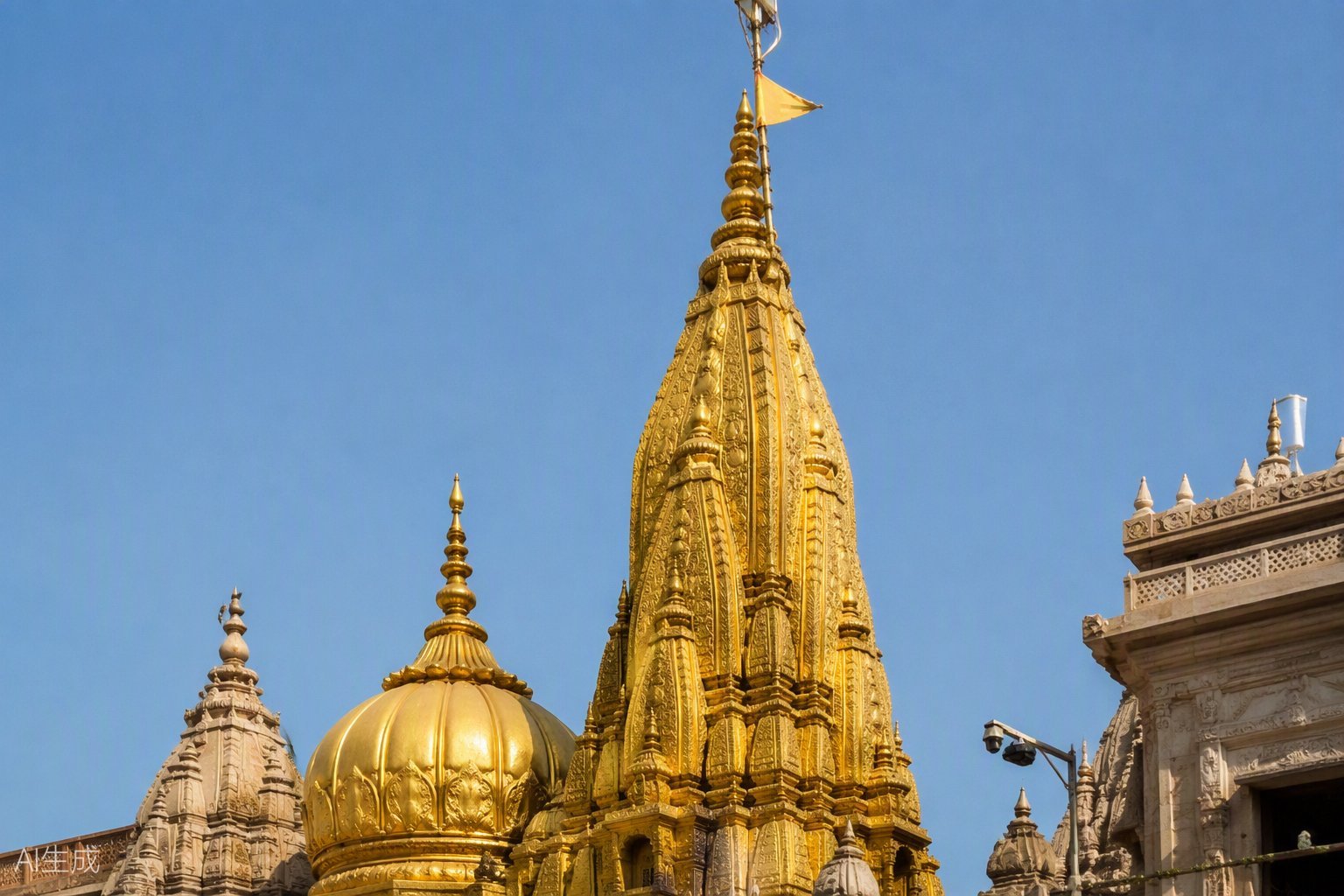
| Gold work | Shikhara gold plating associated with Maharaja Ranjit Singh's patronage (1830s) |
| Corridor | Kashi Vishwanath Dham, inaugurated December 2021 |
| Managed by | Shri Kashi Vishwanath Temple Trust (Government of Uttar Pradesh) |
Who Is Baba Vishwanath?
To millions of devotees, the deity of this temple is simply Baba Vishwanath — the beloved father-lord of Kashi. Vishwanath (also Vishweshwara) means "Lord of the Universe": Vishwa, the universe; Nath, the Lord. According to Hindu tradition, Shiva himself chose Kashi as his eternal city, and the linga enshrined here is counted among the twelve Jyotirlingas, the most sacred manifestations of Mahadev.
In Kashi, the relationship between deity and devotee is famously intimate. Baba is not a distant cosmic power here; he is the city's own lord, greeted by name in its lanes, its tea stalls and its boats. Pilgrims say "Kashi ke Kotwal" for Kaal Bhairav the guardian, "Annapurna" for the mother who feeds the city — and at the centre of this sacred household sits Baba Vishwanath.
What Does Vishwanath Mean?
The name carries the temple's whole theology in two syllables: the lord who holds the entire universe (vishwa) is present (nath/isha) in this one small shrine in one ancient city. Devotional tradition associates Kashi with the idea that the whole cosmos is gathered into this kshetra — which is why a single darshan here is believed by the faithful to equal pilgrimages far longer.
Where Is the Temple?
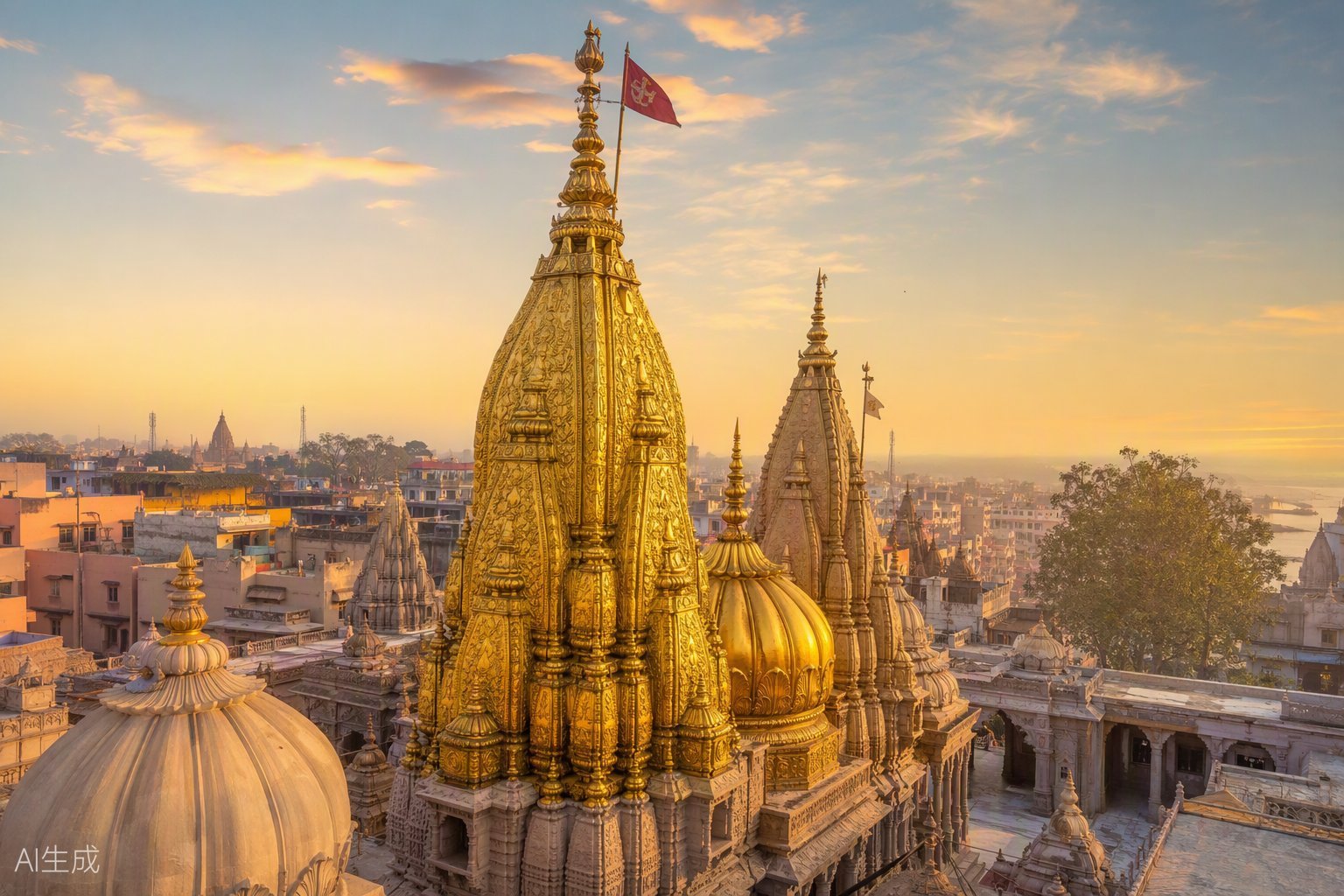
The temple stands in the old city of Varanasi, in the maze of lanes around Vishwanath Gali, a short walk above the Ganga ghats. Since 2021, the Kashi Vishwanath Dham Corridor connects the temple precinct directly to the riverfront near Lalita Ghat, so pilgrims can now walk from the Ganga to the temple through a grand ceremonial plaza. The older approach through Vishwanath Gali's narrow, shop-lined lane remains an experience in itself.
Why Is Kashi Vishwanath Sacred?
Three convictions converge here. First, the Jyotirlinga: the Dwadasha Jyotirlinga Stotram names Vishwanath among the twelve supreme abodes of Shiva. Second, the city itself: the Kashi Khanda of the Skanda Purana celebrates Kashi as Avimukta, "the never-forsaken", the place Shiva does not leave even at cosmic dissolution. Third, liberation: a widespread devotional belief holds that those who die in Kashi receive the Taraka mantra from Shiva and attain moksha. Whether a pilgrim comes for merit, for love of Mahadev, or for the city's three-thousand-year aura, Vishwanath is the still centre of it all.
Kashi Vishwanath as Jyotirlinga
According to Puranic tradition, the Jyotirlingas commemorate Shiva's manifestation as an infinite pillar of light (jyoti) that neither Brahma nor Vishnu could measure. Kashi's linga is one of these twelve. Tradition further holds that the original Vishwanath linga was safeguarded through the temple's turbulent medieval centuries; the present sanctum enshrines the linga worshipped today in the garbhagriha. Our dedicated Jyotirlinga page explains the theology in depth.
Ancient Religious References
The Kashi Khanda (Skanda Purana), the Shiva Purana and the Linga Purana glorify Kashi and Vishweshwara extensively. The Rigvedic-era city of Varanasi is referenced in early literature, and Kashi appears across the Mahabharata and the Puranas as a pre-eminent tirtha. These are matters of scripture and tradition, distinct from documented history.
Historical Development
A temple at this site is documented from at least the early medieval period. The structure was destroyed in 1194 CE during Qutb-ud-din Aibak's campaign, rebuilt, destroyed again in the 15th century, rebuilt under Raja Todar Mal in Akbar's time (1585), and demolished in 1669 under Aurangzeb, who had the Gyanvapi mosque raised on part of the site. In 1780, Maharani Ahilyabai Holkar of Indore built the present temple immediately adjacent to the old site. This sequence is documented history; the emotional and legal questions around it are treated on this website with neutrality and respect — see our history page.
Ahilyabai Holkar's Reconstruction
Maharani Ahilyabai Holkar (1725–1795), the widowed queen-regent of Indore and one of the most admired rulers in Indian history, rebuilt Kashi Vishwanath in 1780 beside the earlier site. Her restoration of Vishwanath is remembered by devotees as an act of supreme devotion; historians remember it as part of her extraordinary programme of temple-building and dharmashala endowments across India. The temple you enter today is substantially her temple.
Later Patronage
In the 1830s, Maharaja Ranjit Singh, the Sikh emperor of Punjab, donated the gold that plates the temple's shikharas — the "golden temple" gleam pilgrims see today. In 1839, two domes were gilded; the main shikhara followed. Rani Baiza Bai of Gwalior and other patrons also contributed to the complex over the 19th century.
Temple Architecture
The temple is a compact Nagara-style structure: a sanctum (garbhagriha) housing the Jyotirlinga, fronted by pillared mandapas, and crowned by the great gold-plated shikhara rising about 15.5 metres, accompanied by smaller spires. The gold work, the silver-plated doors, and the deep, lamp-lit interior create an atmosphere that pilgrims describe as stepping out of time. The wider complex — now expanded by the Dham — includes the Gyanvapi well enclosure, the Jnana Vapi precinct, and numerous subsidiary shrines. See the architecture page for a fuller walkthrough.
The Sanctum and the Shivling
The Jyotirlinga of Vishwanath rests in a silver altar within the small, intensely atmospheric garbhagriha. Devotees traditionally offer Ganga jal, bilva leaves, milk and flowers. During abhishek, the linga is bathed amid Vedic chanting — many pilgrims describe the moment of touching or beholding the linga as the emotional summit of their yatra. Non-Hindus should note that entry into the innermost areas follows temple rules that have varied over time; always confirm current access rules officially.
Nandi and the Temple Complex
As at every great Shiva temple, Nandi the bull faces the lord. The complex around the sanctum includes shrines of Vishnu, of Virupaksha and Sanishwara, of Avimukteshwara — a reminder that old Kashi temples are households of deities, not single shrines. The Dham restoration rediscovered and re-consecrated dozens of long-hidden subsidiary temples within the precinct.
Maa Annapurna Connection
Devotional tradition in Kashi is a household: Vishwanath provides liberation, but Maa Annapurna — a form of Parvati as the giver of food — ensures no one in Shiva's city goes hungry. Her temple stands very close to Vishwanath, and tradition holds a Kashi darshan incomplete without her. The Annapurna tradition also shapes Kashi's culture of annadaan (food charity).
Kaal Bhairav Connection
Kaal Bhairav, the fierce form of Shiva, is the Kotwal — the police-chief or guardian magistrate — of Kashi in local tradition. Pilgrims customarily take his "permission" and protection before or after Vishwanath darshan; his temple is a short ride from the old city.
Ganga Connection
Vishwanath stands where it does because of the river. The Ganga here flows in an unusual northward arc, and tradition holds that the river herself turns to salute Shiva's city. The classical pilgrim sequence — Ganga snan at dawn, then darshan of Baba with river water for abhishek — is now physically eased by the corridor, which brings the ghats to the temple's doorstep.
Kashi Vishwanath Dham Corridor
Inaugurated in December 2021, the Kashi Vishwanath Dham project expanded the temple precinct from roughly 3,000 to about 50,000 square metres, creating a direct, processional connection between the Ganga and the temple, with pilgrim facilities, a museum, galleries, and restored historic temples. It has transformed the darshan experience. Read the corridor guide for verified details.
Darshan, Aarti and Puja
General darshan is free; Sugam Darshan (assisted faster queue) and aarti attendance are bookable through the official Temple Trust portal, which is also the only safe place to book Rudrabhishek and other pujas. Timings and rules change on festival days — always verify on the official portal shortly before visiting. This website never collects payments for darshan or puja. Start with our complete darshan guide.
Festivals
Maha Shivratri is the temple's greatest day, when Kashi becomes a sea of devotion. The month of Sawan (Shravan), especially its Mondays, draws immense crowds for jalabhishek. Dev Deepawali on Kartik Purnima lights the ghats below. Rangbhari Ekadashi brings Kashi's own colour festival to Baba's court. See the festival calendar.
How to Reach
Varanasi is served by Lal Bahadur Shastri Airport (VNS, ~26 km), Varanasi Junction (BSB), Kashi (KEI) and Banaras (BSBS) railway stations, and national highways. Vehicles cannot enter the old-city lanes; the last stretch to the temple is on foot or by e-rickshaw to designated points. Full routes, stations and walking guidance: How to Reach Varanasi.
Best Time to Visit
October to March offers the most comfortable weather. Sawan Mondays and Shivratri are spiritually electric but extremely crowded; summer afternoons are severe — plan darshan early morning. Details in the best-time guide.
Visitor Etiquette
- Mobiles, cameras, bags and leather items are not permitted inside; use official lockers.
- Dress modestly; shoulders and knees covered is respectful everywhere in the old city.
- Queues are part of darshan — carry patience, follow security staff directions.
- Photography inside the temple is prohibited; the ghats and corridor have their own sensitivities.
- At Manikarnika and Harishchandra ghats, do not photograph funeral rites.