Who Was Ahilyabai Holkar?
Ahilyabai Holkar (1725–1795) ruled the Malwa kingdom of the Holkars from Indore for three decades and is remembered as one of the ablest and most beloved rulers in Indian history. Widowed young, she governed personally: hearing petitions under a tree, building roads, wells, ghats and dharmashalas, and administering with a justice that contemporary records and later historians alike praise. Her name remains a byword for righteous rule.
Her Devotion
Historical accounts describe Ahilyabai's piety as the organizing principle of her charity. She saw her treasury as held in trust for dharma: annadaan (food charity), waterworks, pilgrim rest-houses and temples across the subcontinent bear her patronage. Maheshwar, her capital on the Narmada, remains steeped in her memory.
The Reconstruction of Kashi Vishwanath
In 1777–1780 Ahilyabai had the present Kashi Vishwanath temple constructed on the plot immediately adjacent to the site of the temple destroyed in 1669. The consecration of the new Vishweshwara linga in 1780 restored a full temple of Vishwanath to Kashi for the first time in over a century. She did not disturb the Gyanvapi structure beside it; the two precincts have coexisted since.
Devotees revere this act as among the greatest services rendered to Shiva in the modern era; historians note it as characteristic of her pan-Indian temple patronage — she built or restored shrines at Somnath, at sites in Ujjain, Haridwar, Badrinath, Rameswaram and many other tirthas, alongside ghats, wells and dharmashalas by the hundred.
Historical Context
The 18th century saw Hindu pilgrimage infrastructure rebuilt across the former Mughal heartland as Maratha power rose. Ahilyabai's Kashi project belonged to this restoration moment — but her motivation, contemporaries emphasize, was personal devotion joined to royal duty: she endowed the daily worship, the priests, and the annadaan, not merely the building.
The Temple She Built
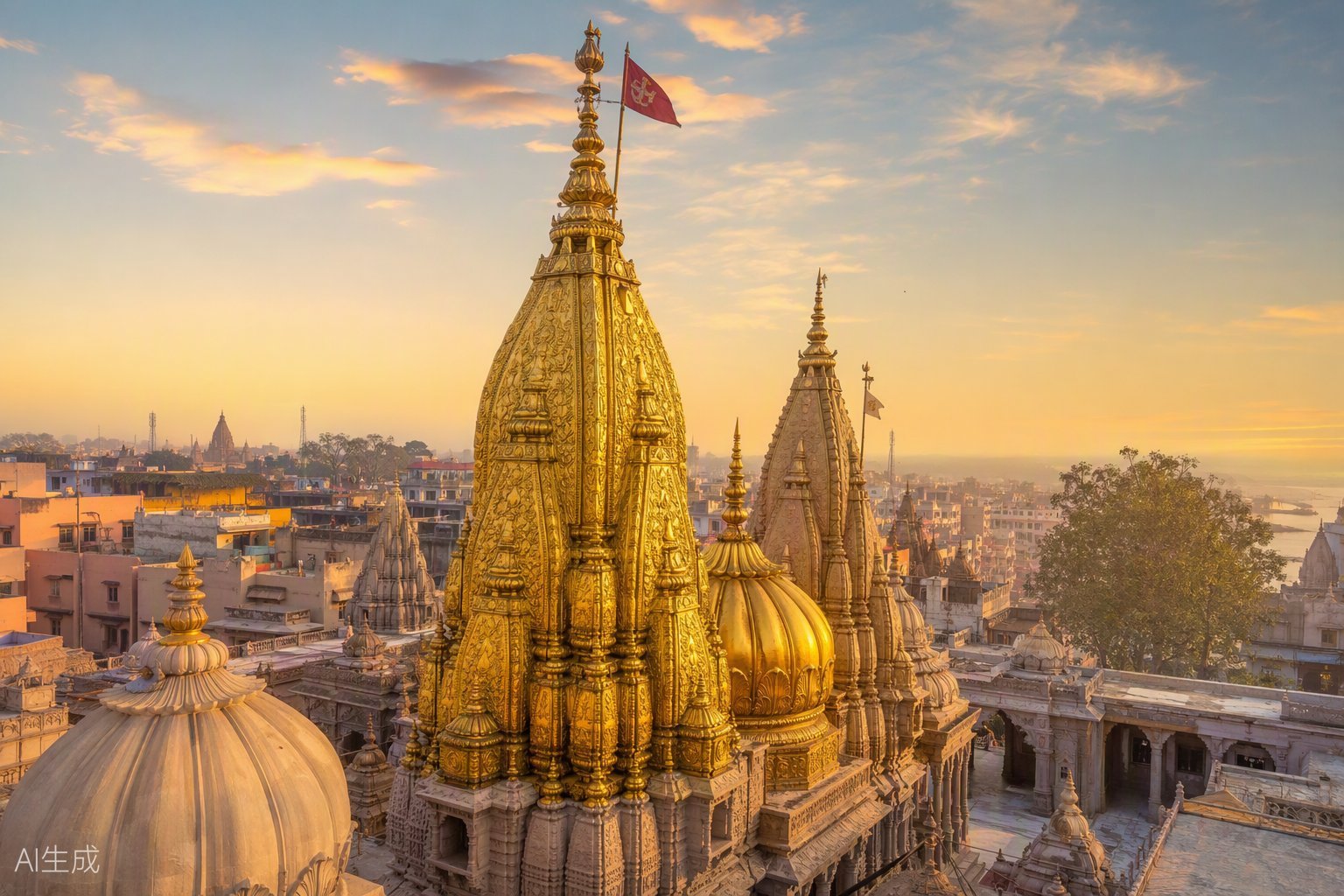
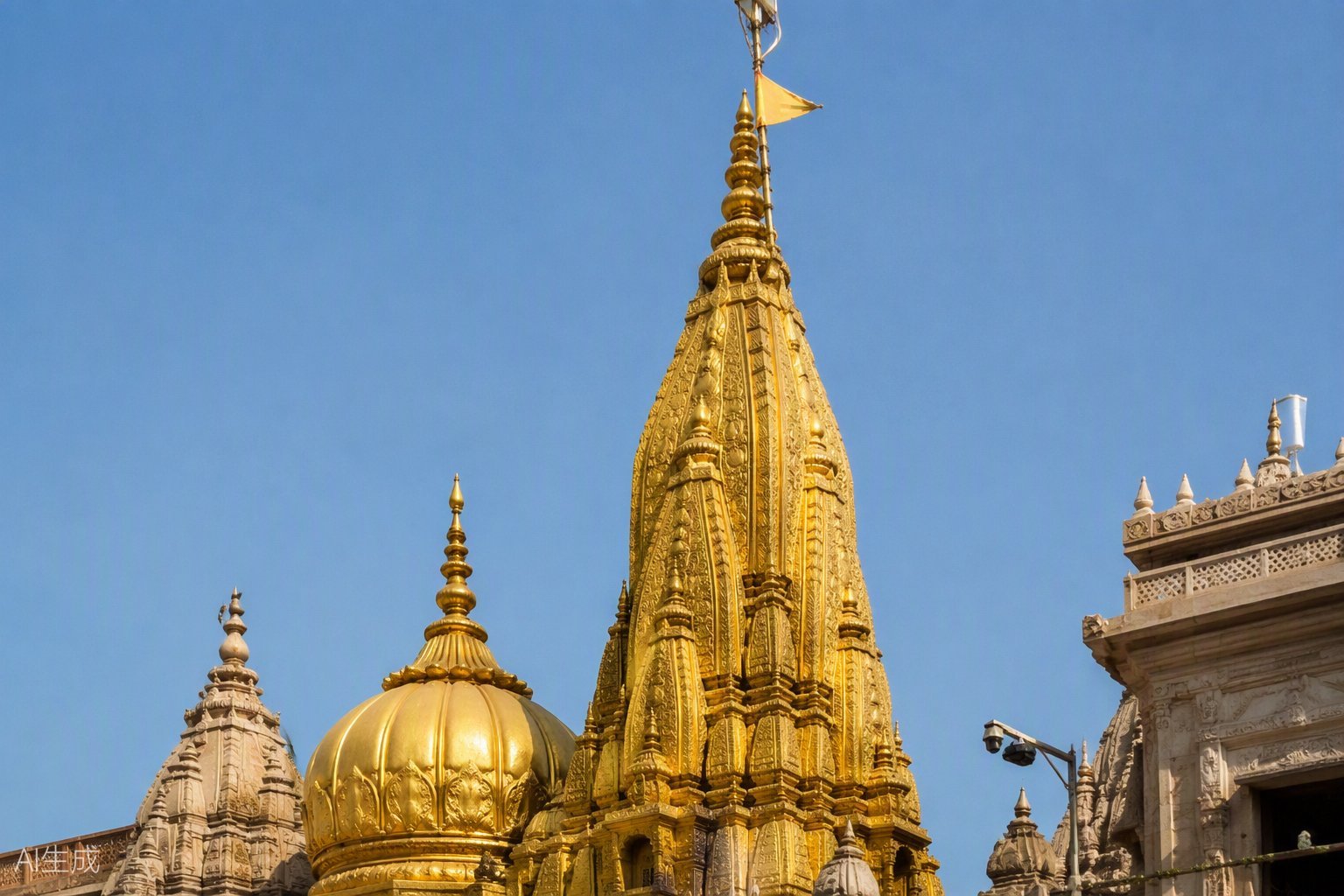
The 1780 temple is the one pilgrims enter today: the compact Nagara sanctum and spire that the 1830s gold plating would later make the "Golden Temple of Kashi". To stand before the Jyotirlinga is, in a real sense, to stand inside her gift. The architecture page describes the structure; the history page sets the longer sequence.
Her Wider Legacy
- Temples and restorations across India — from Somnath to Rameswaram — attributed to her patronage.
- Hundreds of dharmashalas, wells, stepwells and ghats, including work on Kashi's own riverfront.
- A reputation for justice and accessibility celebrated in folk memory and serious history alike.
- Maheshwar: her fort, her ghats, her weaving legacy (Maheshwari sarees) — an easy extension of a Kashi yatra for the historically curious.
Timeline
Birth
Born at Chondi, in present-day Maharashtra, to Mankoji Shinde.
Assumes rule
After the deaths of her husband Khanderao (1754) and father-in-law Malhar Rao Holkar (1766), she takes charge of the Holkar state.
Rebuilds Kashi Vishwanath
Constructs and consecrates the present temple adjacent to the historic site.
Passing
Dies at Maheshwar, mourned across Malwa; her reputation only grows thereafter.
Visiting in Her Footsteps
In Kashi, her temple is the destination; attentive pilgrims also notice her era's ghats and dharmashalas. At Maheshwar (if your route permits), her fort and the Narmada ghats preserve her presence most vividly. She asked for no statue in Kashi — the golden shikhara is memorial enough.