An Overview
Kashi Vishwanath is not a vast horizontal temple like the great South Indian complexes; it is a vertical, jewel-box Nagara shrine — a small, intensely concentrated sanctum rising into gold. Its power lies in compression: the holiest space is tiny, the spire above it luminous, the city pressing close on every side. With the 2021 Dham, that compression now releases into a grand sandstone plaza facing the Ganga.
The Shikhara
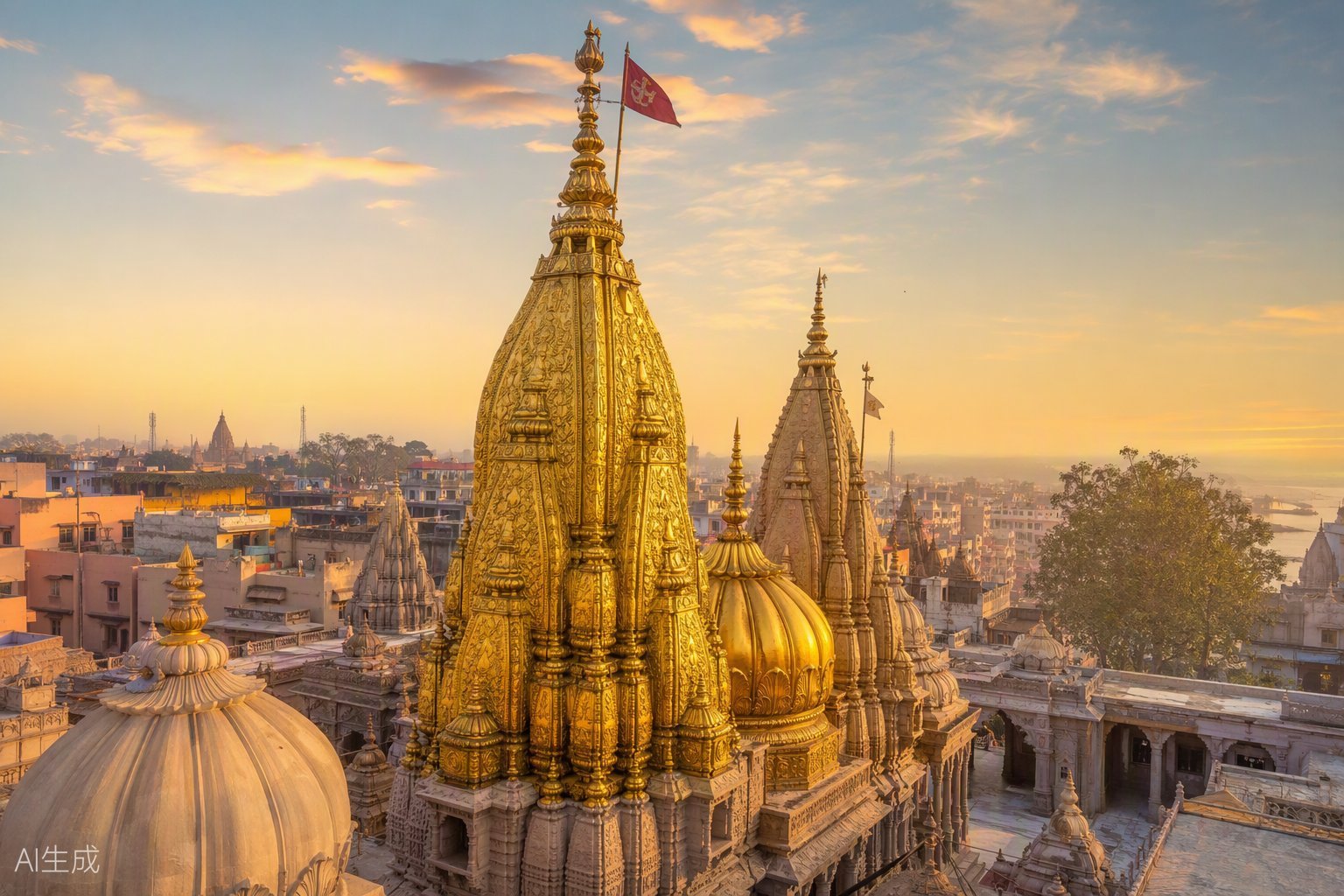
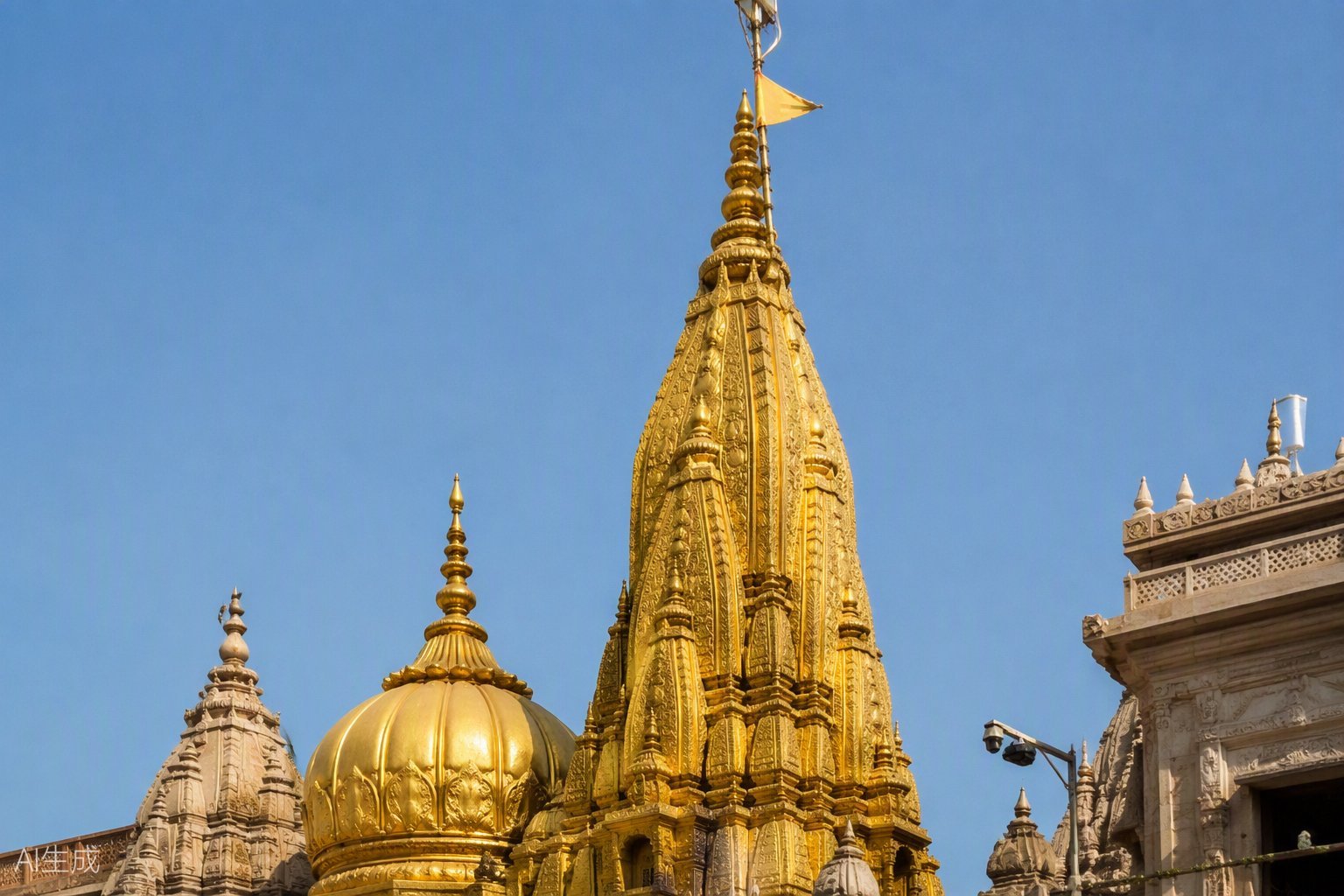
The main spire rises about 15.5 metres above the sanctum in the curvilinear Nagara profile, its surface sheathed in gold plate donated through Maharaja Ranjit Singh's patronage (1830s). Two smaller gilded spires accompany it — the triple golden silhouette that defines the Kashi skyline. Gilded chattra (ceremonial parasol-finial) and kalasha crown the top; a trishul and flag mark it as Shiva's.
The Garbhagriha and the Jyotirlinga
The womb-chamber is deliberately small — only a few devotees can stand before the linga at once, which is why darshan here feels so personal and so intense. The Jyotirlinga sits within a silver altar (mandapa base); Ganga jal, milk, bilva and flowers are offered continuously. The chamber's lamps, mirrors of flame on silver and gold, and the press of chanting create an atmosphere no photograph is permitted to capture — and none could.
Mandapas and Silver Doors
Before the sanctum lie pillared halls where pilgrims gather for aarti and queue for abhishek. The silver-plated doors, 19th-century additions, are themselves minor masterpieces of repoussé work. Look also for the carved frames and brasswork contributed by guilds and patrons across two centuries.
The Wider Complex
- Gyanvapi precinct: the historic mosque structure adjoining, incorporating the plinth and rear wall of the pre-1669 temple — visible evidence of the site's layered past (access and viewing follow current rules).
- Jnana Vapi well: the "well of wisdom" within its own enclosure, central to local tradition about the safeguarding of the linga in 1669.
- Subsidiary shrines: Avimukteshwara, Vishnu, Virupaksha, Sanishwara, the Saptarishi images and more — old Kashi temples are households of many deities.
- Dham-restored temples: over 40 historic small temples rediscovered during corridor construction were conserved and re-consecrated within the precinct.
The Dham Architecture
The corridor is built in a contemporary temple-city vocabulary: Chunar sandstone colonnades, a broad processional plaza from the river steps to the temple, the Mumukshu Bhawan, museum and gallery spaces, and facilities halls. Architects and patrons describe the intent as giving pilgrims in the 21st century what the medieval city could not — space, shade, water, accessibility — while framing, never overwhelming, the 1780 temple. The view from the Ganga steps up the illuminated plaza at dusk is now one of Kashi's defining images.
Materials and Craft
Gold and silver over stone in the old temple; red Chunar sandstone, brass and carved wood in the new. The craft traditions are Banarasi — the same metalworking and stone-carving lineages that serve the city's hundreds of shrines. When you walk the corridor, notice the carved pillars: motifs of bilva, trishul, damru and the Ganga recur as a quiet visual litany.
Architecture as Theology
In Hindu temple thought, the shikhara is the mountain of the gods rising over the cave of the heart (the garbhagriha). At Vishwanath the symbolism is doubled: the golden mountain rises over the linga of light, at the centre of the city said to rest on Shiva's trident. However one reads it — as theology, as art, as history — the building earns its stillness.