
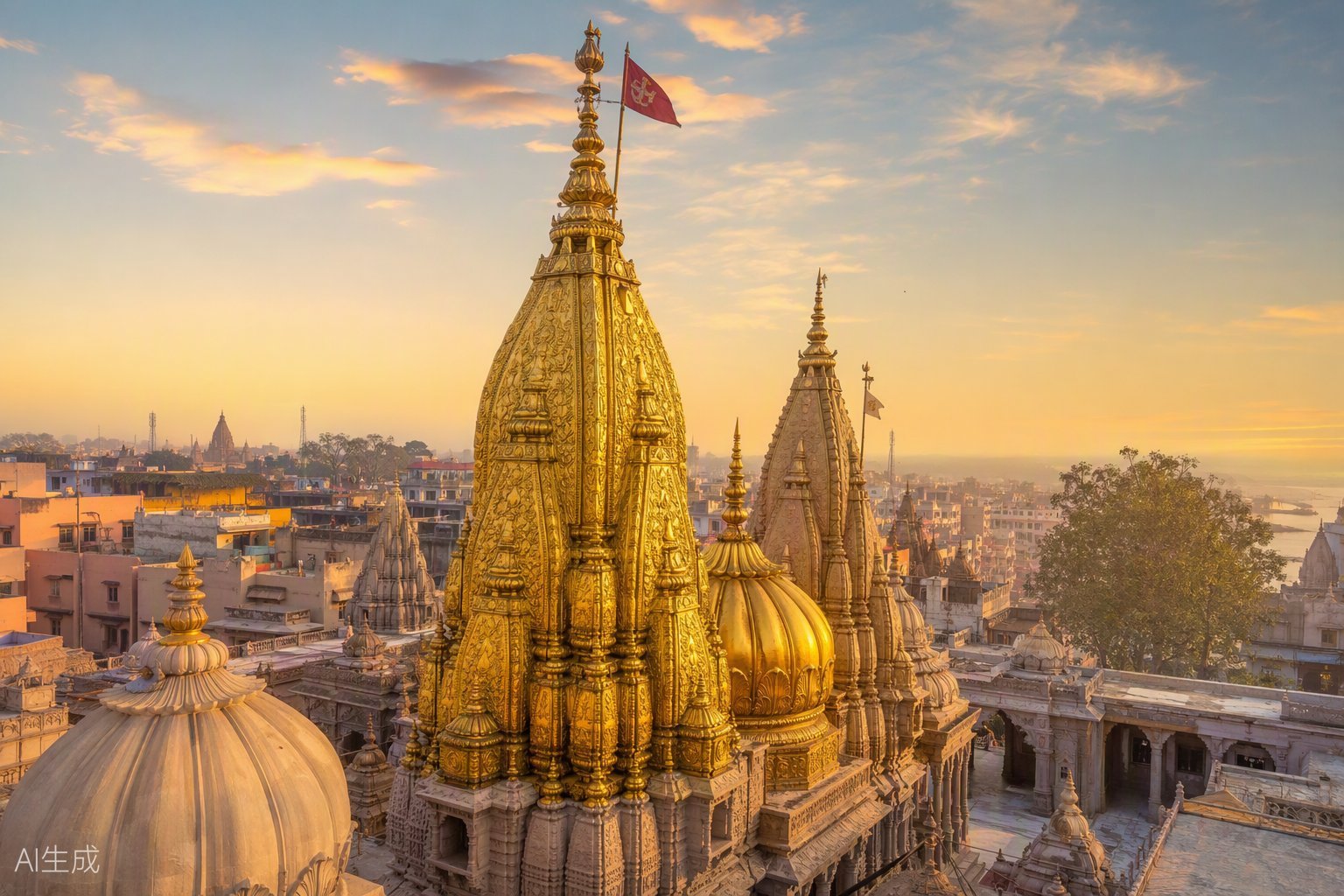
Where the City Meets the Goddess
Along a crescent of the Ganga roughly six kilometres long, more than eighty ghats — broad stone stairways — step down into the river. Together they form one of the world's great urban riverfronts: a continuous theatre of bathing, prayer, yoga, music, mourning, commerce and contemplation that has run without intermission for centuries. To know Kashi you must walk her ghats.
Understanding the Ghats
A ghat is not just steps. Each is a named, storied place with its own temples at the top, its own regulars, its own hour of glory. Some belong to dawn (Assi, Dashashwamedh), some to evening (Dashashwamedh's aarti), some to the last rites (Manikarnika, Harishchandra), some to royal builders (Scindia, Man Mandir). The riverfront as a whole reads south-to-north from Assi to Raj Ghat — the classic parikrama of the city is a walk along this arc.
The Great Ghats
- Dashashwamedh — the main ghat, site of the evening Ganga Aarti; tradition links it to Brahma's ten-horse sacrifice.
- Assi — the southern cultural ghat where the Assi stream meets the Ganga; morning music, yoga, chai.
- Manikarnika — the great cremation ghat; Hindu tradition's most sacred threshold to liberation. Visit with reverence.
- Harishchandra — the second cremation ghat, named for the king who kept truth at all cost.
- Panchganga — northern ghat where tradition says five rivers conjoin; quieter, older-feeling.
- Kedar — red-and-white striped steps beneath the Kedareshwar temple; beloved of photographers.
- Scindia — with its half-submerged Shiva temple, leaning picturesquely into the river.
- Man Mandir — topped by Sawai Jai Singh II's 18th-century observatory.
- Namo Ghat — the modern ghat with folded-hands sculptures and cruise facilities.
- Raj Ghat — the northern bookend of the ghat arc, near the old city's edge.
How to Experience the Riverfront
- Walk it: Dashashwamedh to Manikarnika and back is the essential stretch; allow an unhurried hour each way.
- Row it: a dawn boat from Assi or Dashashwamedh shows the whole amphitheatre at once — the definitive Kashi view.
- Sit it: choose one step, one hour, no agenda. The ghats reward stillness.
Etiquette & Safety
The Ganga here is a goddess and a workplace, a bathtub of faith and a place of cremation. Dress and behave modestly; never photograph funerals or mourners; ask before photographing bathers or priests; swim only in designated chained areas; and in monsoon keep well clear of the fast water.
Best Times
Dawn for the light and the bathers' devotion; dusk for the aarti; late night for the ghats' strange, silent beauty. Winter mornings bring mist that photographers dream of; Dev Deepawali turns the whole arc into a galaxy of lamps.