
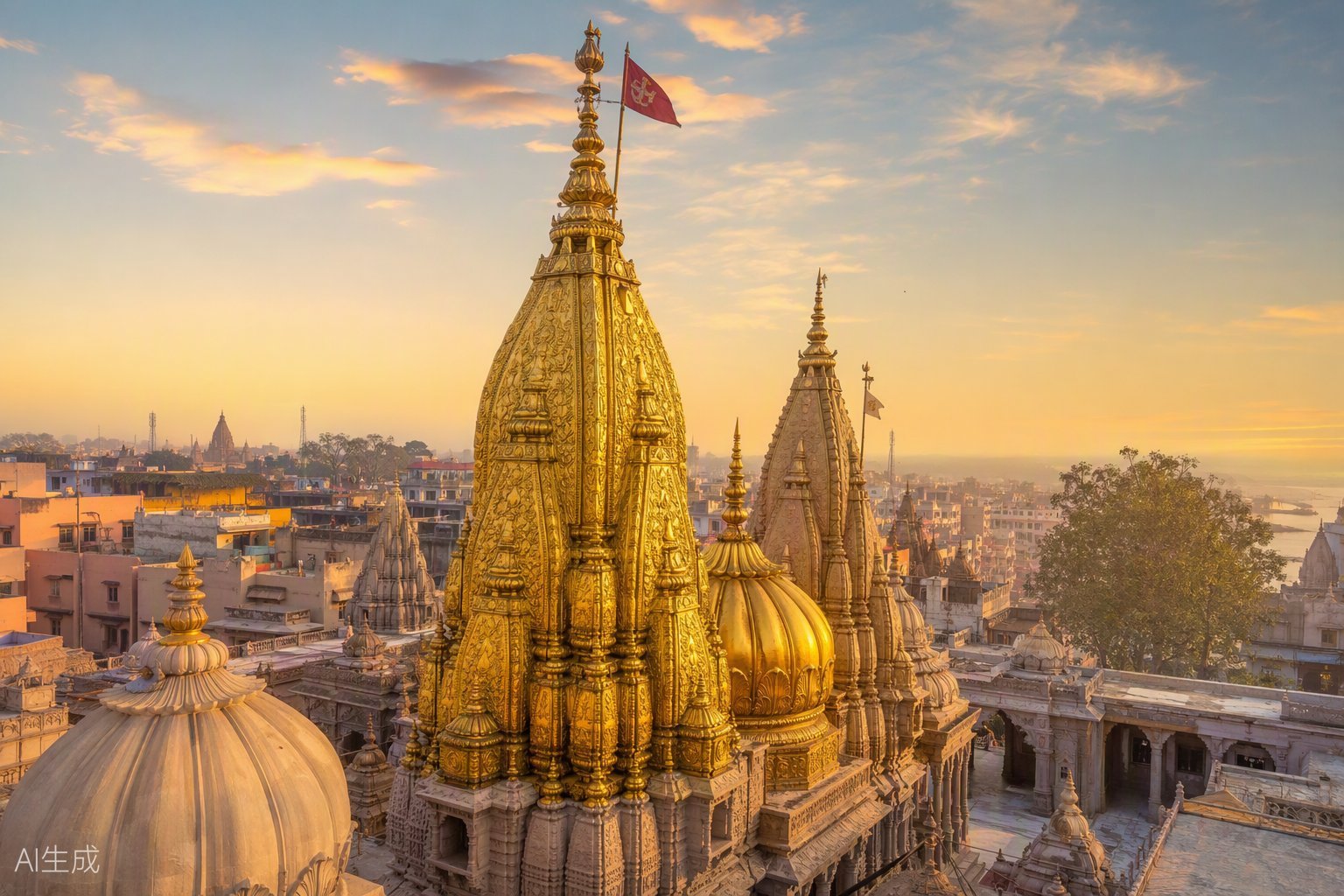
What Aarti Means
Aarti is the offering of light: a lamp of camphor or ghee wicks circled before the deity while hymns are sung — the devotee's love made visible as flame. At Kashi Vishwanath, aarti is the pulse of the temple day: five ceremonies from before dawn to deep night, each with its own mood, music and meaning.
The Five Aartis
| Aarti | Time of day | Character |
|---|---|---|
| Mangala Aarti | Pre-dawn (~3–4 AM) | The lord's awakening — quiet, intimate, profoundly moving. |
| Bhog Aarti | Late morning | The midday food-offering to Baba. |
| Sandhya (evening) Aarti | At dusk | The lamps of evening; temple glows against the darkening sky. |
| Saptarishi Aarti | Evening (~7 PM) | Seven priests offer aarti in the names of the seven sages — Kashi's signature ceremony. |
| Shringar / Shayana Aarti | Night (~9 PM) | The lord adorned, then put to rest; the temple day closes. |
The Atmosphere
Inside the small, lamp-lit sanctum precinct, aarti at Vishwanath is nothing like a spectacle — it is concentrated devotion at arm's length. Bells, conch, drum and chant fill the chamber; flame traces circles before the Jyotirlinga; for a few minutes the press of Kashi falls away. Many pilgrims count Mangala Aarti among the most powerful experiences of their lives.
Attending: Booking Essentials
- Aarti attendance is ticketed and bookable only on the official portal — slots are limited and festival dates sell out far in advance.
- Report before the stated time with ID; aarti slots involve security screening and prohibited-item deposit like darshan.
- Children's entry and age rules follow official conditions — check at booking.
Visitor Etiquette
- Phones stay in lockers; aarti is experienced, not recorded.
- Follow the priests' and volunteers' seating directions.
- Modest, traditional dress is customary for pre-dawn and evening aartis.
Deep Dives
See the dedicated Mangala Aarti guide for the pre-dawn ceremony, and pair temple aarti with the riverside Ganga Aarti at Dashashwamedh for Kashi's complete circle of fire — one flame for the linga, one for the river.