A temple destroyed and rebuilt across centuries — and a devotion that never broke.
Overview: Reading This History
The history of Kashi Vishwanath is two histories braided together: the sacred history held in scripture and tradition, and the documented history established by records and scholarship. This page separates them clearly. Where events are painful or disputed, we use neutral language and direct readers to primary and scholarly sources; this page offers context, not commentary.
Ancient Kashi Traditions
Kashi is among the oldest continuously inhabited sacred cities on earth. The Kashi Khanda of the Skanda Purana devotes a hundred chapters to the city's glory; the Shiva Purana and Linga Purana celebrate Vishweshwara; the Jabalopanishad associates Kashi with liberation. Tradition holds that the Avimukteshwara/Vishweshwara linga has been worshipped here since unremembered antiquity.
Archaeology confirms Varanasi's habitation from at least the early first millennium BCE (Rajghat excavations). Chinese pilgrims Xuanzang (7th century CE) described a great Shiva temple and a tall brass statue of Shiva in Varanasi — evidence of an important Shaiva establishment long before the medieval destructions.
Timeline of Destruction and Reconstruction
The early temple
A major Vishweshwara temple existed by the early medieval period, rebuilt and endowed by successive rulers, including Gahadavala-era patronage of Kashi's shrines.
First recorded destruction
Historical records indicate the temple was destroyed during Qutb-ud-din Aibak's campaign after the defeat of the Gahadavala king Jayachandra.
Rebuilding and renewed destruction
The temple was rebuilt — the Razia-era and later records are fragmentary — and destroyed again in the 15th century (under Sikandar Lodi's period of iconoclasm in the region, per historical accounts).
Todar Mal's rebuilding
Raja Todar Mal, Akbar's finance minister, is recorded to have rebuilt the Vishwanath temple with the emperor's assent — the structure scholars call the "Todar Mal temple".
Aurangzeb's order
Mughal records and later accounts document that Aurangzeb ordered the temple's demolition in 1669; the Gyanvapi mosque was constructed on part of the plinth. The original temple's rear wall survives visibly within the mosque structure.
Ahilyabai Holkar rebuilds
Maharani Ahilyabai Holkar of Indore constructed the present temple on the adjacent plot, completing it in 1780. The Nandi of the old temple, oriented toward the old sanctum, still faces the historic site.
The golden shikharas
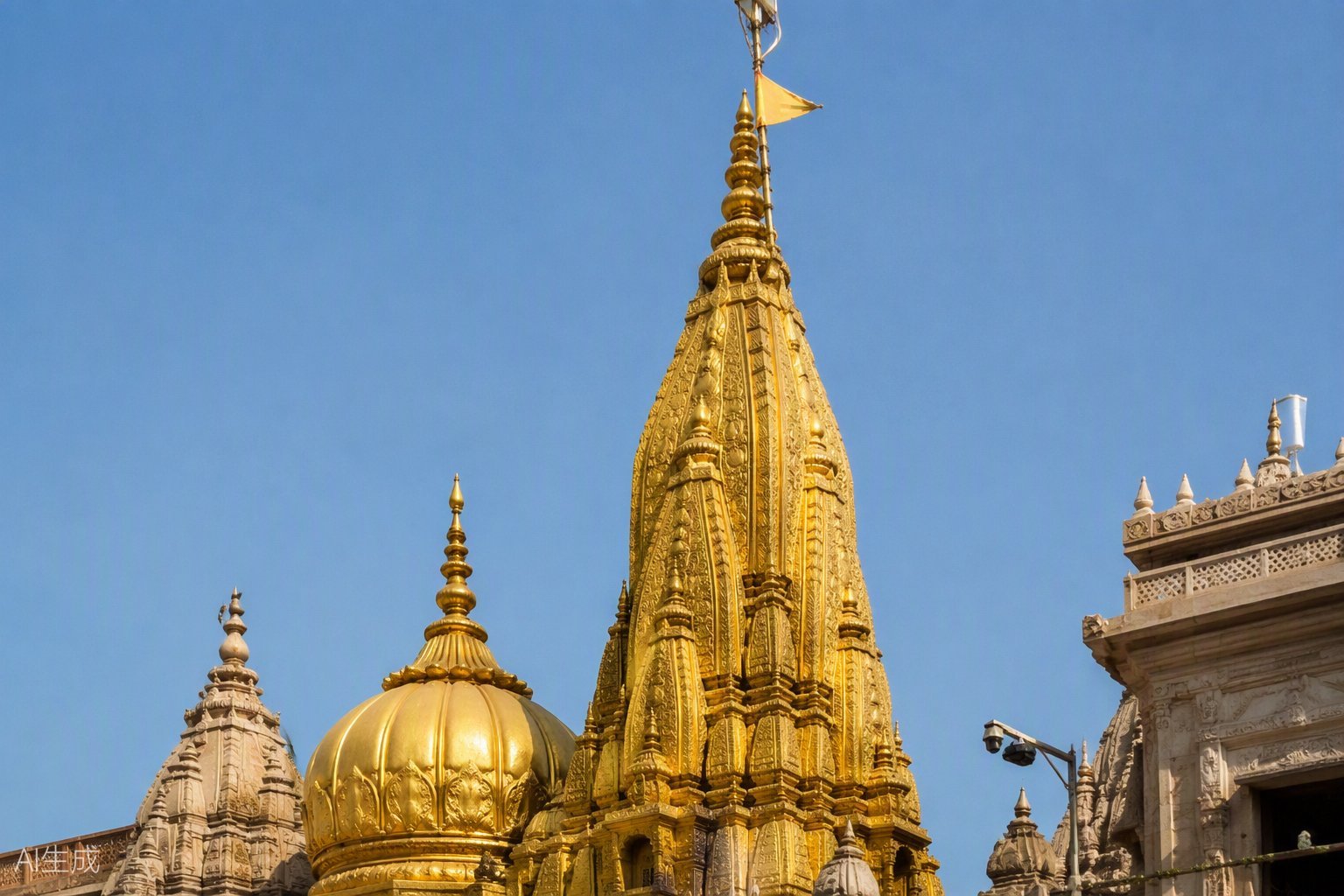
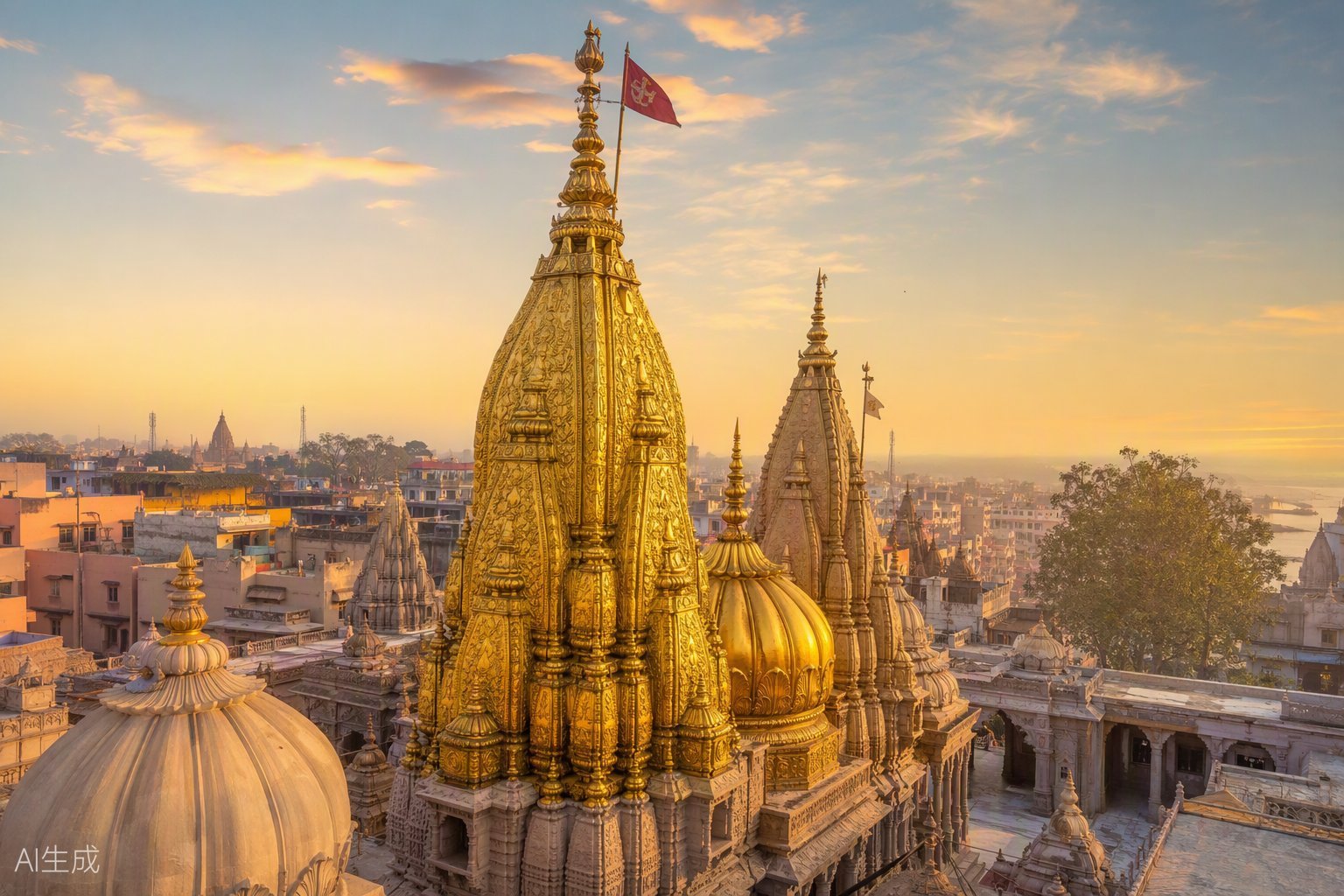
Maharaja Ranjit Singh of Lahore donated gold (accounts commonly cite around one tonne) used to plate the temple's two main domes/shikharas — the origin of the "Golden Temple of Kashi".
Temple Trust administration
The Uttar Pradesh government enacted the Shri Kashi Vishwanath Temple Act (1983), placing administration under a state trust with the Kashi Naresh's traditional role acknowledged.
Kashi Vishwanath Dham
The corridor project acquired and cleared the dense fabric between temple and river, rediscovered 40+ buried subsidiary temples, and opened a grand pilgrim precinct in December 2021.
The Medieval Centuries, Carefully
Between the 12th and 18th centuries the temple's physical fortunes followed the politics of the age: destruction under some rulers, rebuilding under others, worship continuing regardless. What is remarkable to the historian is the continuity of devotion — pilgrim literature, Marathi and Bengali saint poetry, and travel accounts show Kashi's sanctity undiminished through every century. When the present temple rose in 1780, it rose beside — not over — the old site, and the two precincts have stood side by side since.
Gyanvapi: A Note on the Present
The Gyanvapi mosque adjoining the temple is the subject of ongoing legal proceedings and surveys in Indian courts. This website is an independent informational platform: we report only what courts and official bodies have placed on record, avoid advocacy, and direct readers to court orders and reputable reportage for current status. Faith traditions, documented history and active litigation are different things and are kept separate here.
Ahilyabai Holkar's Temple of 1780
The present temple is modest in footprint and immense in presence: the garbhagriha with the Jyotirlinga, the sabhamandapa with its silver doors, and the gold-plated shikhara. Ahilyabai also endowed worship, annadaan and pilgrim facilities. Her wider legacy — rebuilding temples from Somnath to Rameswaram (traditions attribute numerous restorations to her reign) and building ghats and dharmashalas — is explored on the Ahilyabai page.
From 1780 to the Dham
The 19th and 20th centuries added endowments, the silver portal, and the expanding lanes of Vishwanath Gali's ritual economy. Post-Independence, the 1983 Act regularized administration. The 21st-century Dham project has been the largest physical transformation since 1780 — expanding the precinct roughly sixteen-fold and restoring the Ganga-to-temple axis that pilgrimage manuals describe as the classical route.
What the History Means for a Pilgrim
You are not visiting a monument; you are joining an unbroken act of worship older than most cities. The linga before you has been re-enshrined, guarded, hidden and re-consecrated across eight centuries — and the queue beside you is the same queue, in spirit, that Xuanzang saw. That continuity, more than any single structure, is the true monument of Kashi Vishwanath.