
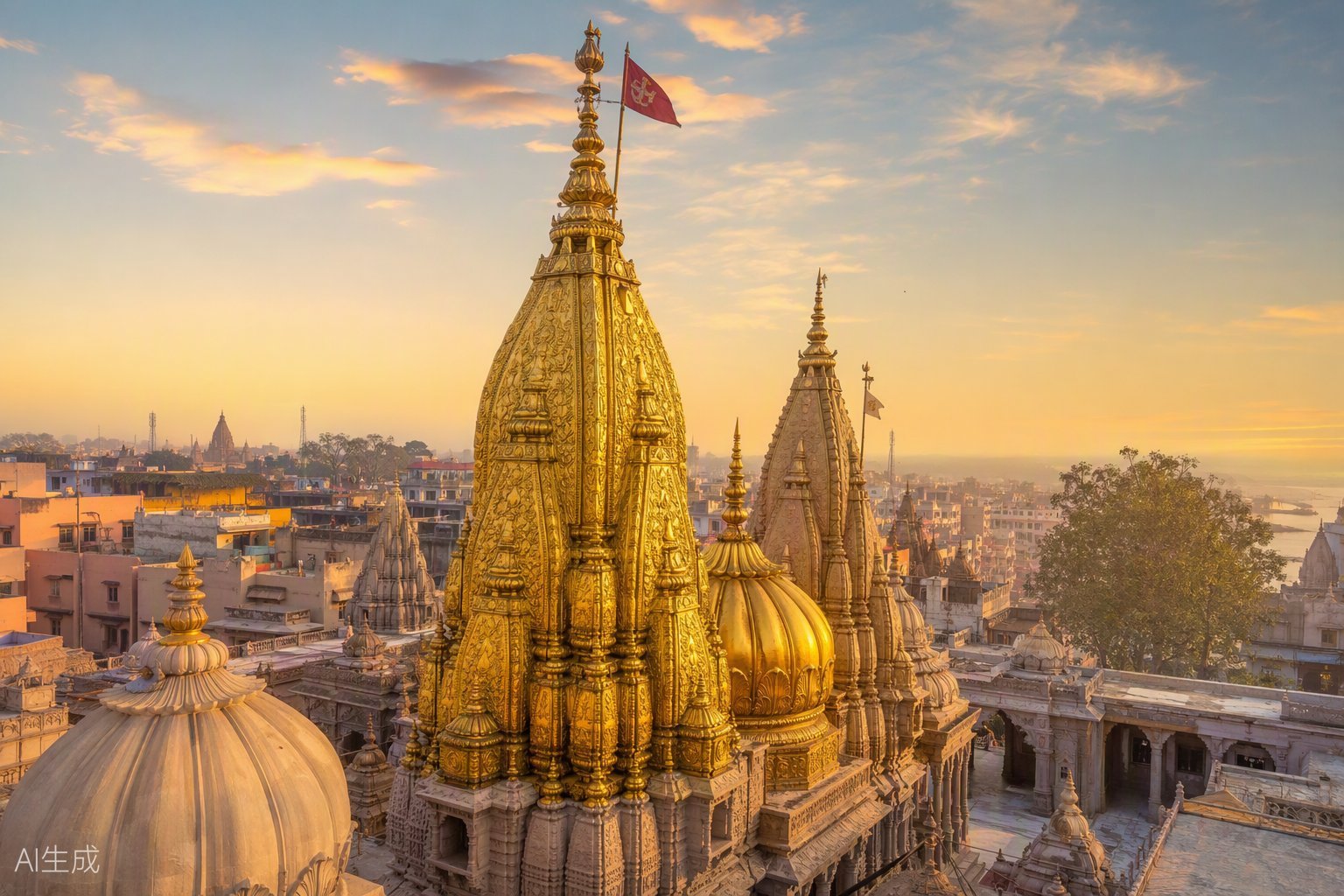
A River That Flows North
At Varanasi the Ganga does something geographically rare: she turns and flows northward for a stretch, back toward her Himalayan source. Hindu tradition reads the geography as devotion — the river herself turning to salute Shiva's city. Whether read as geology or theology, the arc creates the great crescent along which the ghats and the old city were built.
The Descent of Ganga
The Ganga descended from heaven in answer to King Bhagirath's penance, her fall broken by Shiva's matted locks so the earth would not shatter under her force. This is why Shiva imagery and the Ganga are inseparable — and why Kashi, Shiva's city, is the river's most sacred address. Bathing in the Ganga at Kashi is held to wash away sin; the city's widows, pilgrims and poets have come to her banks for three millennia.
The River in Daily Life
Dawn bathers and their whispered prayers; boatmen chanting distances; washermen's rhythms; children learning to swim chained to the steps; priests with brass lotas; the evening aarti's fire reflected in black water — the Ganga is not a backdrop to Kashi but its main street. Pilgrims carry her water to the Jyotirlinga for abhishek; the city returns her offerings at dusk in flame.
On the Water
- Dawn rowboat (Assi or Dashashwamedh to Manikarnika and back): the definitive experience — fix price and duration first.
- Evening aarti boats: gather off Dashashwamedh before the ceremony.
- Monsoon caution: the river runs high and fast July–September; services pause in dangerous conditions — respect the boatmen's judgement.
Keeping the River Sacred
The Ganga's cleanliness is a national undertaking (the Namami Gange programme) and a pilgrim's personal duty: no plastic into the river, no soap at the steps, offerings in bins provided. Reverence, in the 21st century, includes restraint.